

At its 55th General Meeting, Cigref unveiled the 2025 edition of its Strategic Orientation Report, ‘Four archetypes of the digital function for 2040’.
Ce rapport est disponible en français (French version).
« This report is more than just an analysis; it is a call to action. The guidelines and recommendations it sets out have a clear objective, which is the raison d’être of our association: to build a digital world that is sustainable, both environmentally and economically; but also one that is responsible from an ethical and social point of view; and, finally, one that is trustworthy, guaranteeing our security and the protection of our data. It is this digital technology that will drive the growth and competitiveness of our European companies, offering them resilience in the face of crises and acting as a pillar of cohesion in the service of society and its democratic values. » Excerpt from the editorial by Emmanuel Sardet, President of Cigref.
A methodical, contextualised and forward-looking understanding of the major transformations affecting Cigref’s member organisations is an essential part of any policy report.
Based on our analysis of changes in the external environment, this year we turned our attention to a more intimate but equally fundamental question: the future of digital departments. The challenge was no longer simply to answer the question ‘What might happen?’, but to collectively develop answers to the question ‘What do we want to become?’.
The aim was therefore to outline strategic futures and principles for action that digital managers could use to continue creating and capturing value for their organisations.
The report is structured around three parts: prospective analysis, construction of possible futures, and strategic principles for action, which are summarised below.
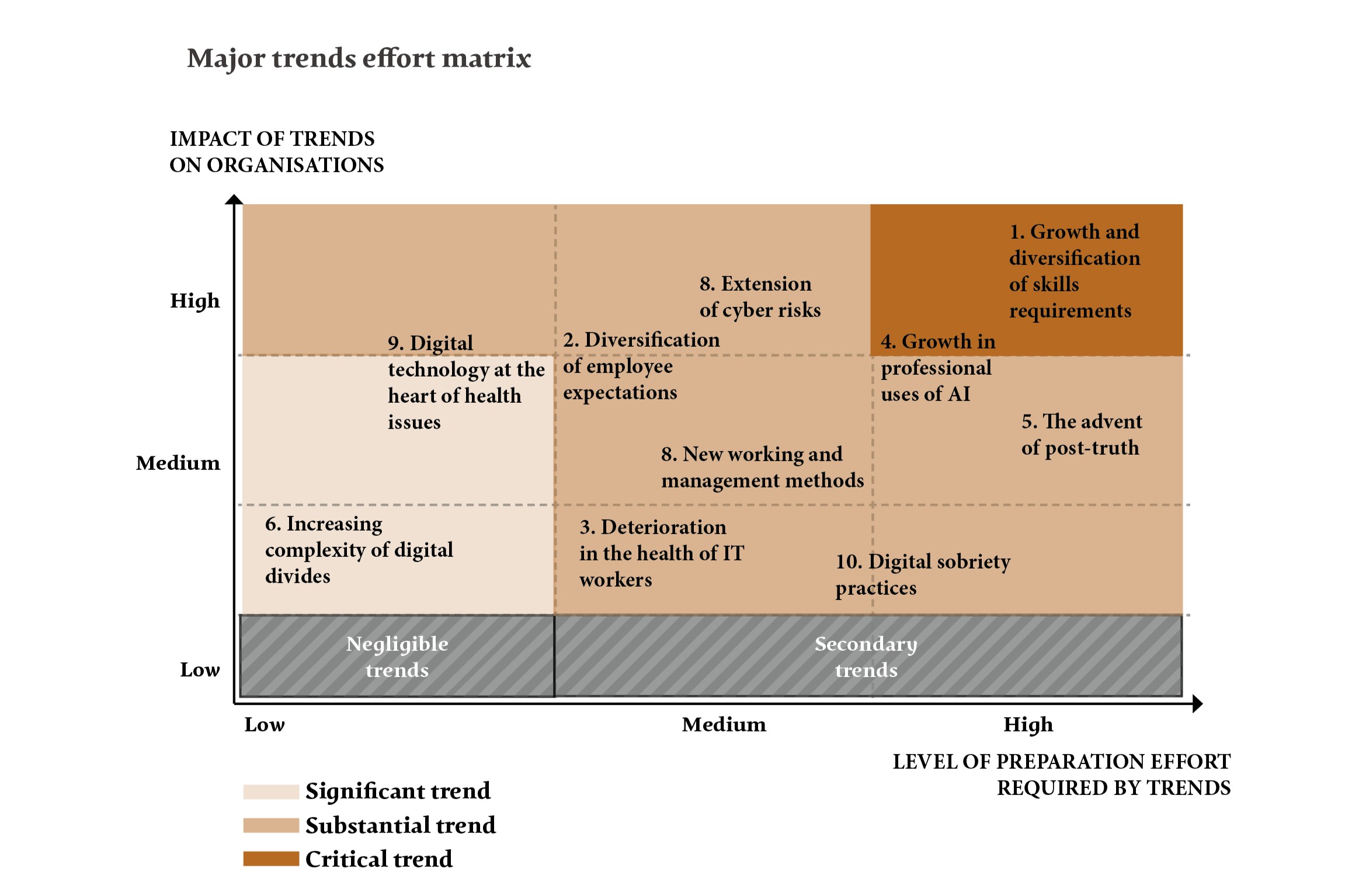
Part 1 – Prospective analysis: major trends and disruptive hypotheses
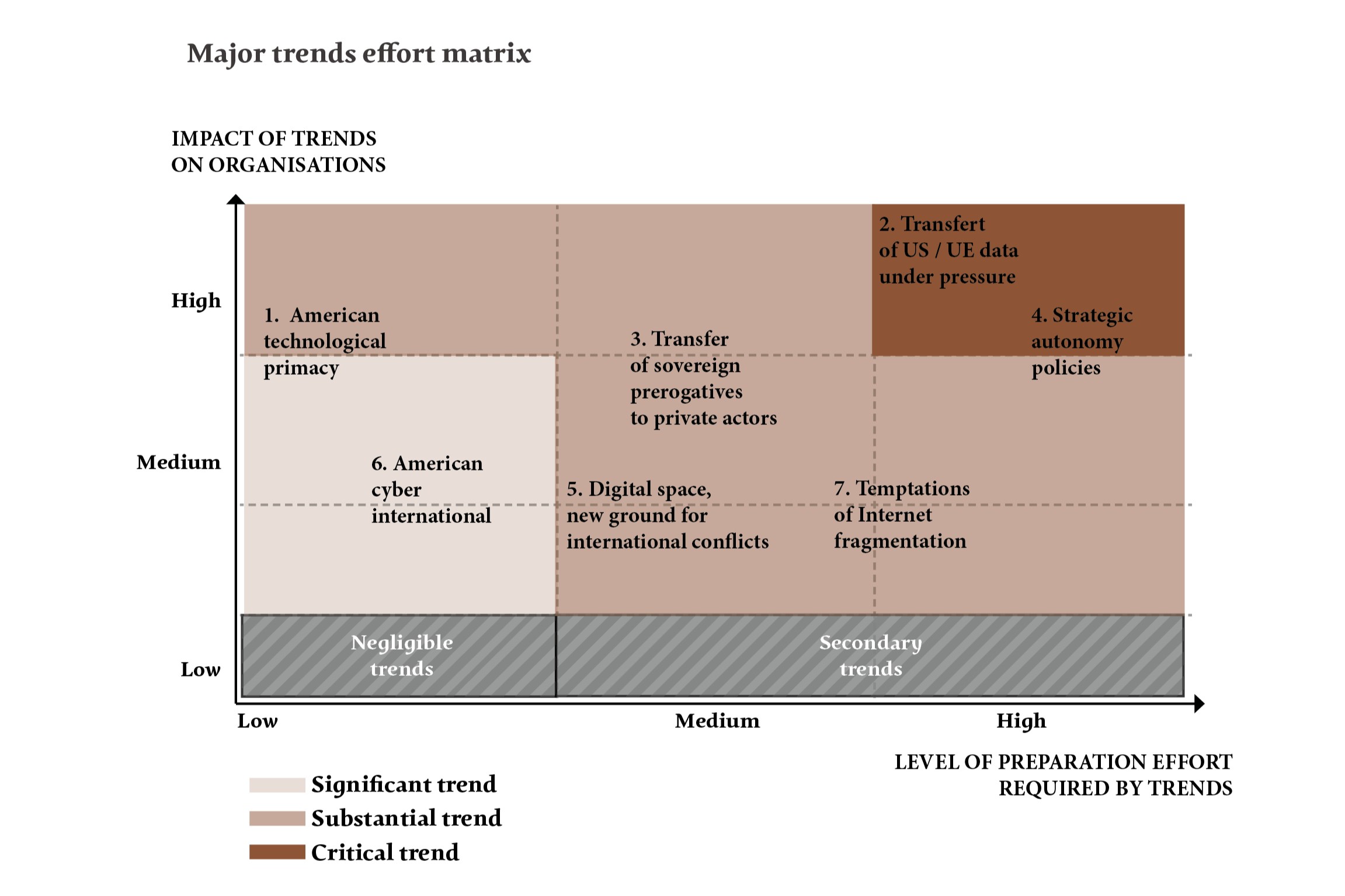
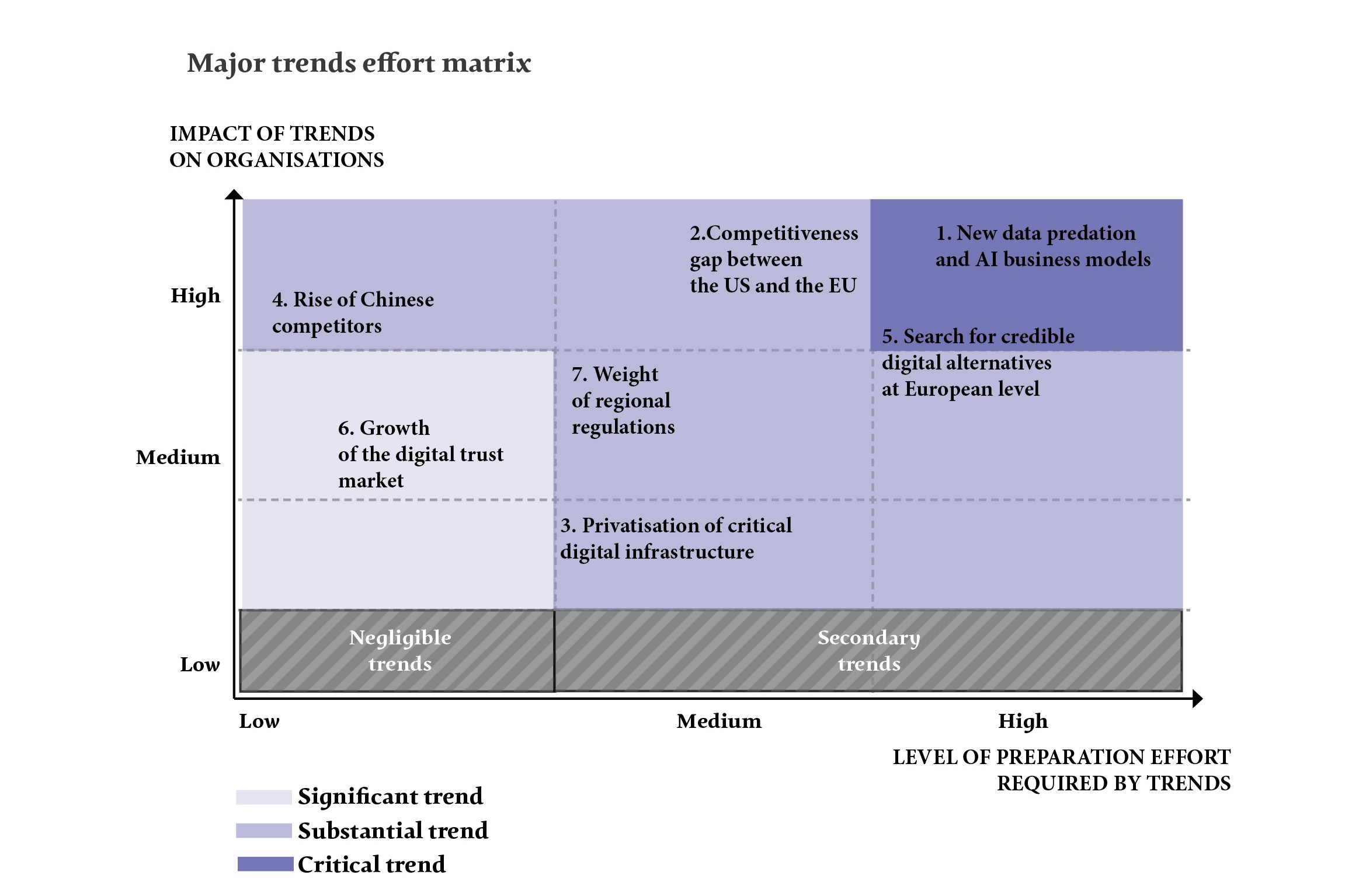
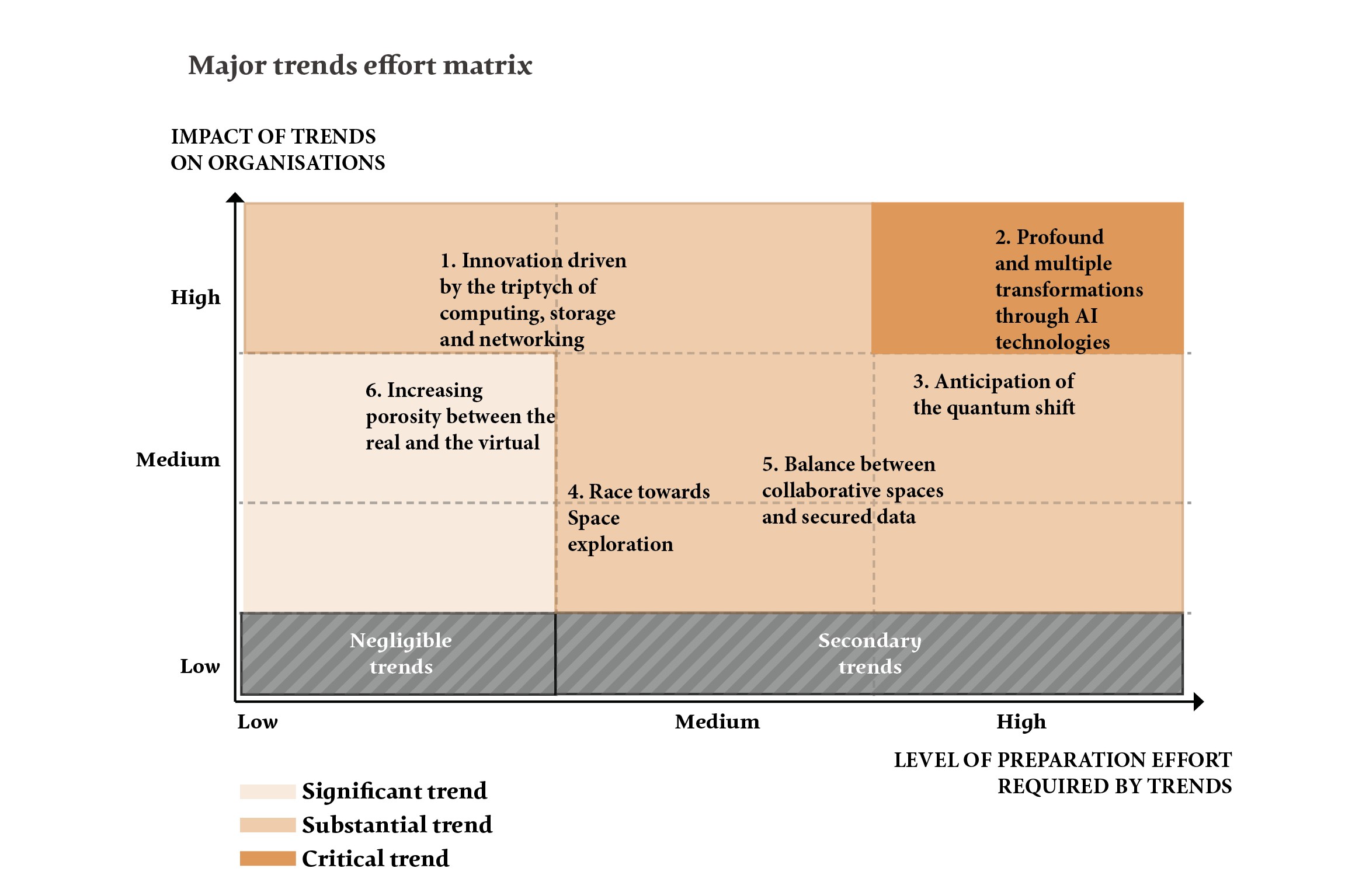
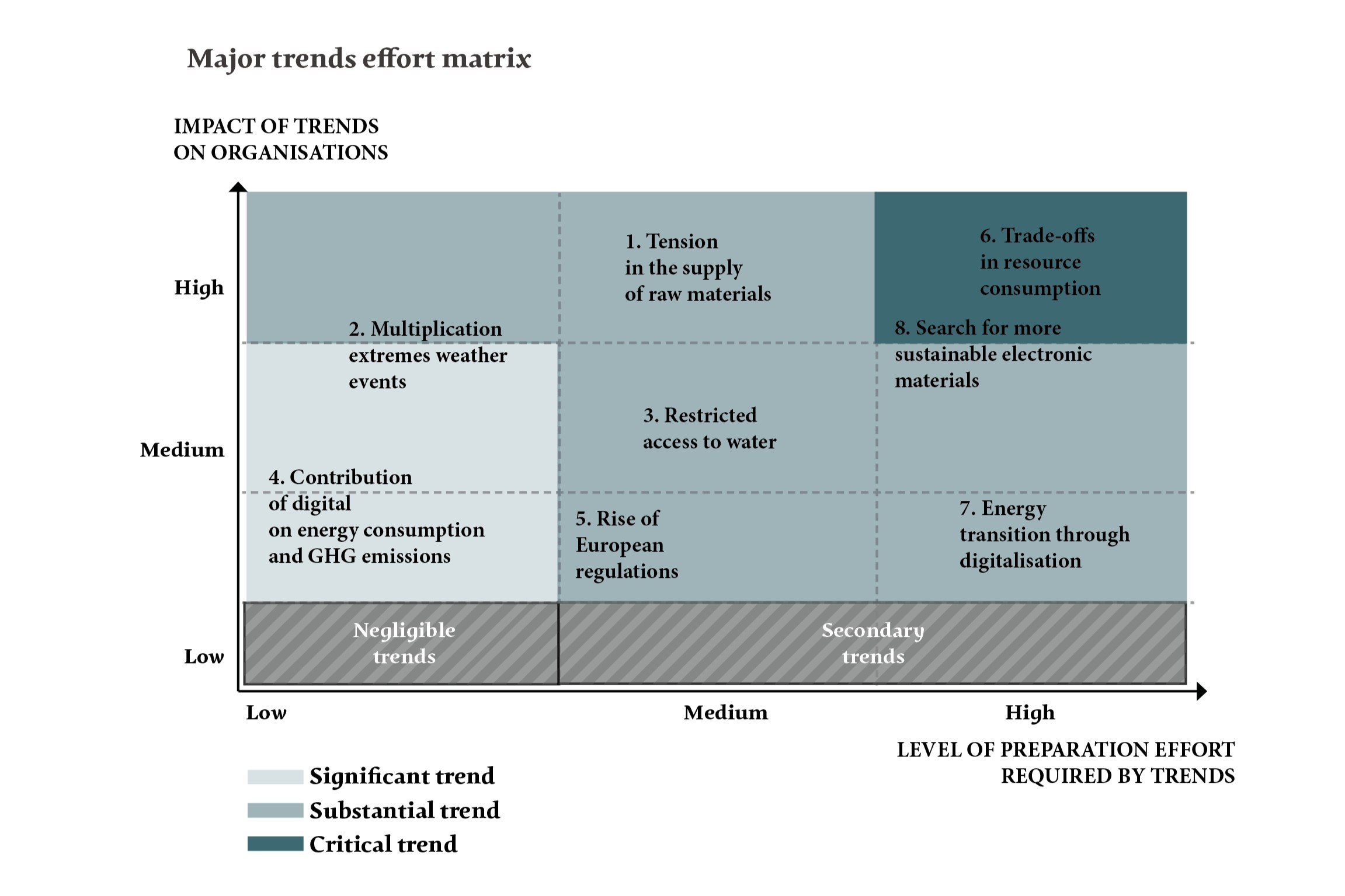
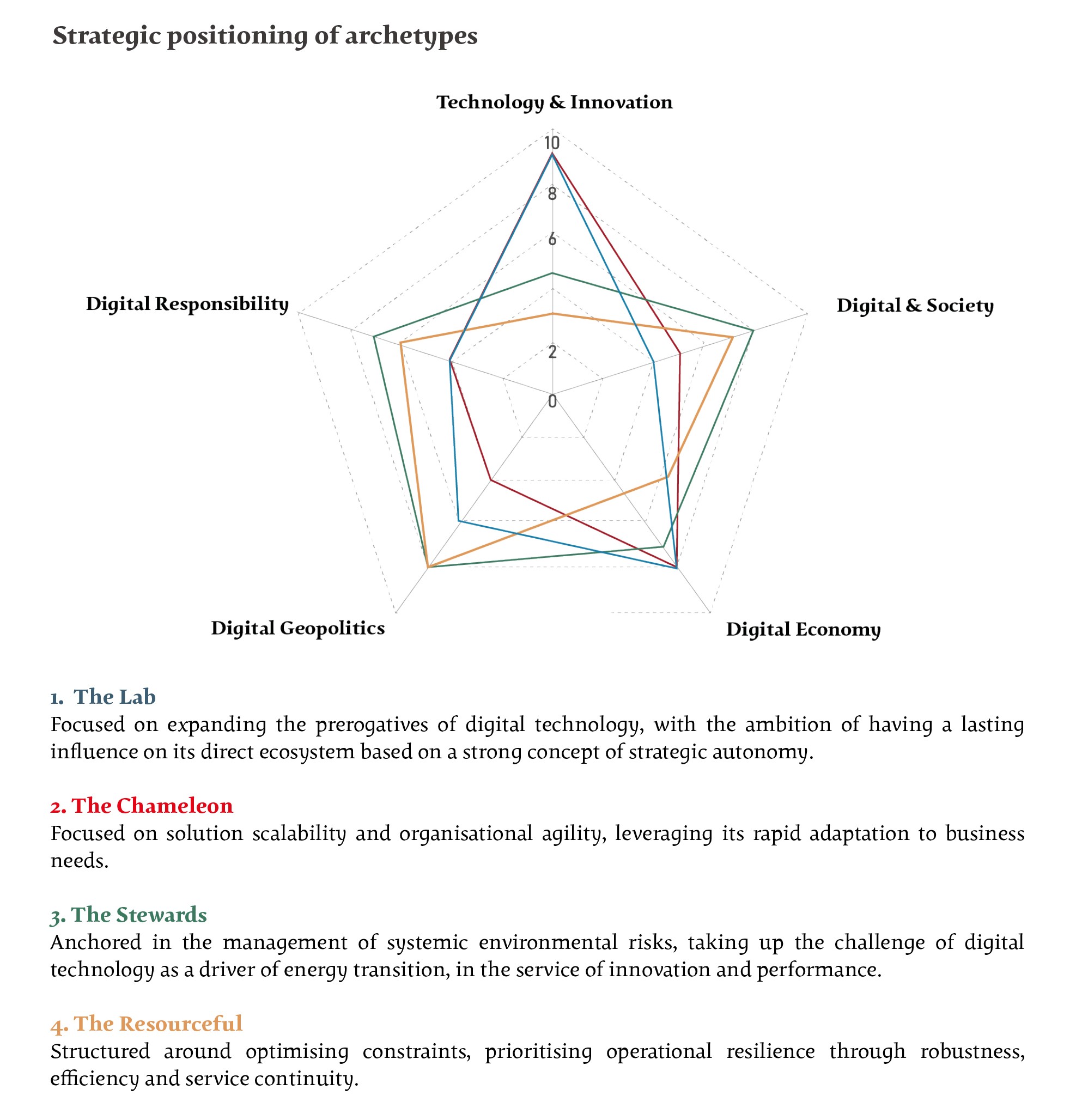
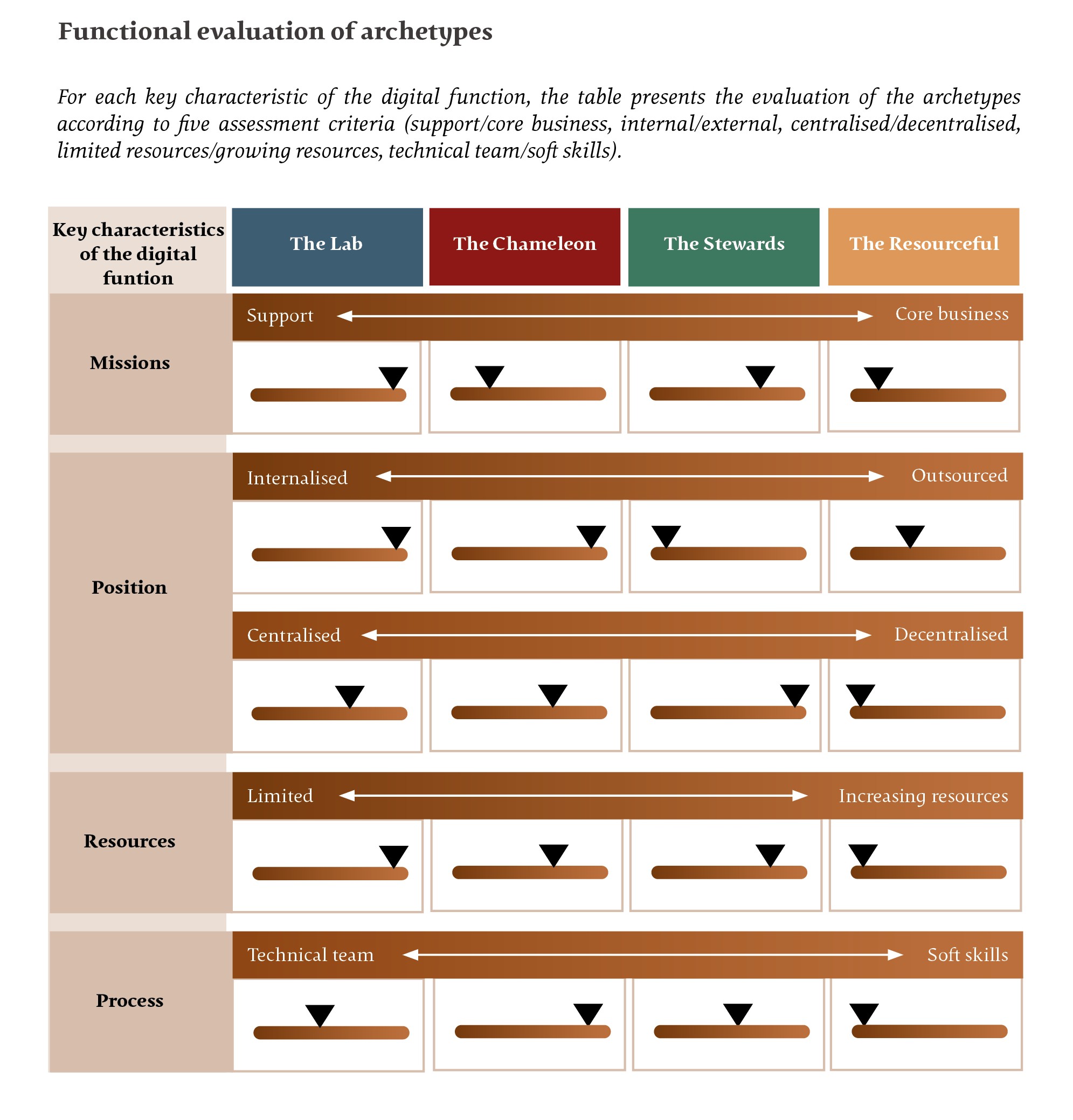
Part 2 – Four archetypes of the digital function of the future
Part 3 – 10 strategic principles for action
1. Proactive resilience – « Offensive resilience will become an asset in ensuring service continuity in the face of international crises. »
2. Strategic autonomy policy – « The politicisation of digital activities, whether imposed or voluntary, will make it necessary to clearly define an internal policy of strategic autonomy. »
3. Rebalancing value chains – « The increasing regionalisation of infrastructure, standards and regulations will require a de facto rebalancing of value chains. »
4. Contractual manoeuvrability – « Contractual manoeuvrability will be a key factor in reducing technological dependencies. »
5. Mastery of the various links in AI technologies – « Mastery of the various links in AI technologies will become an operational requirement. »
6. Ability to build ecosystems – « The ability to build ecosystems will become an essential lever for guiding and supporting technological innovation. »
7. Anticipating resource trade-offs – « Public-private dialogue on virtuous French and European regulations will become a key factor in the digital environmental resilience of organisations. »
8. Environmental resilience of business models – « Energy optimisation and the use of more sustainable materials in the digital sector will be an integral part of business models. »
9. Sensible use of AI technologies – « Guidance and support for the judicious use of AI technologies will become essential in order to make human-machine complementarity a source of sustainable organisational performance. »
10. Enhancing digital skills – « The ability of organisations to anticipate digital skills needs and structure agile training pathways will become a key lever for organisational resilience.«